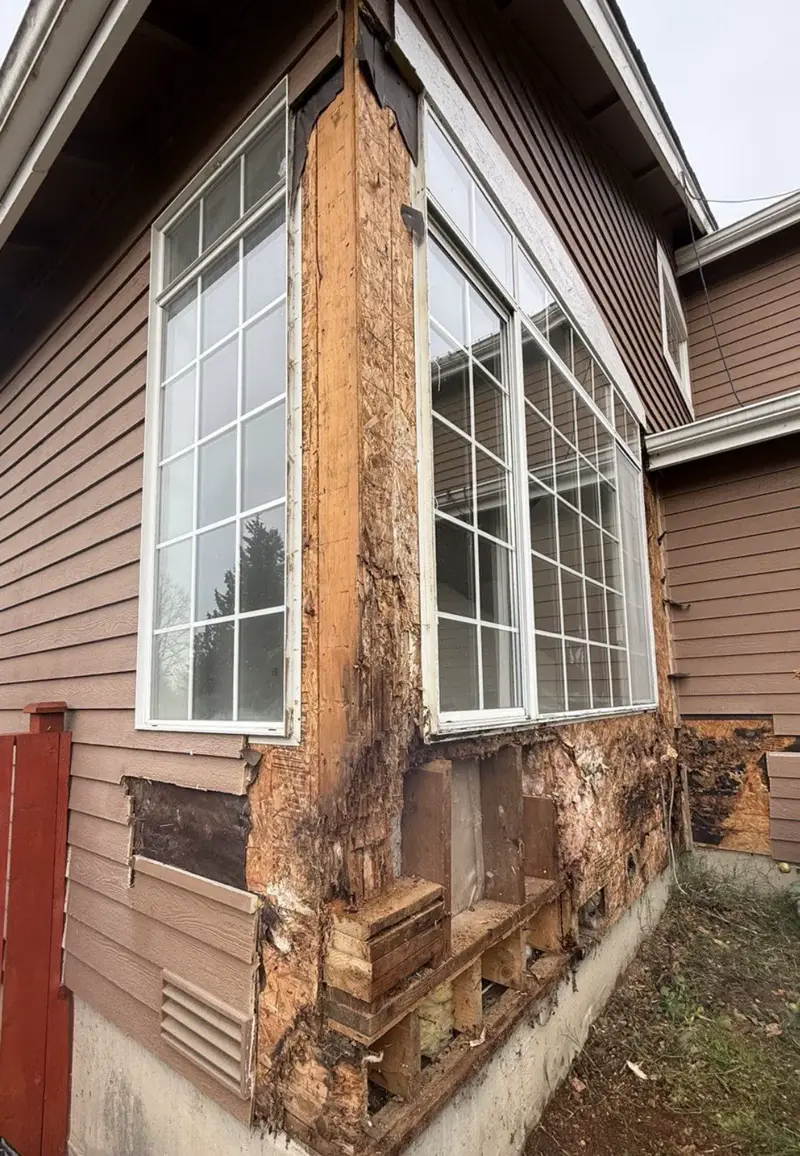
Dry rot rarely announces itself. By the time a board crumbles in your hand, water has usually been working behind the paint for several winters. The good news: rot leaves clues long before it becomes a structural problem, and most of them can be found in a 15-minute walk around the house.
This guide covers where rot starts on Pacific Northwest homes, how to test suspicious wood without damaging it, and how to tell a quick fix from a repair that needs to happen before the next rainy season.
What dry rot actually is
"Dry rot" is a misleading name. All wood decay is caused by fungi that need moisture, usually wood that stays above roughly 20% moisture content for weeks at a time. The name comes from what the wood looks like afterward: dry, brown, shrunken and cracked into small cubes.
In our climate, the fuel is simple: long wet seasons, shade, and small leaks that never get a chance to dry out. Fix the moisture and the decay stops; leave it and it keeps spreading into sheathing and framing.
Where to look first
Rot almost always starts where water collects or where end grain is exposed. Check these spots first:
- Window sills and the bottom corners of window trim
- Corner boards and the bottom course of siding
- Walls below roof-to-wall joints, especially where kick-out flashing is missing
- Fascia boards behind gutters that overflow
- Deck ledgers and rim joists where the deck meets the house
- Door thresholds and the bottom of door jambs
- Porch columns and posts that sit directly on concrete
Early warning signs
- Paint that bubbles, peels or stays dark long after rain
- Hairline cracks running across the grain of trim boards
- Caulk joints that have opened up or pulled away
- Siding that bows, swells or has stains below windows
- Mushroom-like growth or a musty smell near an outside wall
- Interior stains or soft drywall below a window
How to test wood yourself
A flat screwdriver or an awl is all you need. Press the tip into the wood at an angle with firm hand pressure:
- If it barely dents and the wood splinters in long fibers, the wood is sound.
- If it sinks in easily or the wood breaks into short, crumbly pieces, it is decayed.
- Test several spots around the soft area to see how far it goes.
- Fill the test holes with exterior caulk so they do not let more water in.
A moisture meter is even better. Readings that stay above about 20% in dry weather point to an active leak behind the surface.
Small fix or real repair?
| What you find | What it usually means | Next step |
|---|---|---|
| Soft spot in trim, less than a finger deep | Surface decay, leak just starting | Small repair before winter |
| Rot through a sill or corner board | Water has been getting in for years | Replace the board and fix the flashing |
| Soft sheathing behind siding | Leak has reached the wall | Open the wall and repair before it spreads |
| Spongy framing, sagging or movement | Structural damage | Professional repair right away |
Why the leak matters more than the wood
Replacing a rotted board without fixing the reason it got wet only buys a few years. Most rot we repair traces back to one of four things: missing flashing, failed paint and caulk, wood too close to the ground, or gutters that overflow. A lasting repair corrects the water path first, then rebuilds the wood.
When to call a professional
Call when rot goes deeper than the surface, when you find soft sheathing or framing, or when the same area keeps failing after repainting. A good contractor will probe and photograph the damage, show you where the water is coming from and give you a written price before opening anything up.
Frequently asked questions
Can dry rot spread to healthy wood?
Is it safe to paint over rot?
What time of year is best for rot repair?