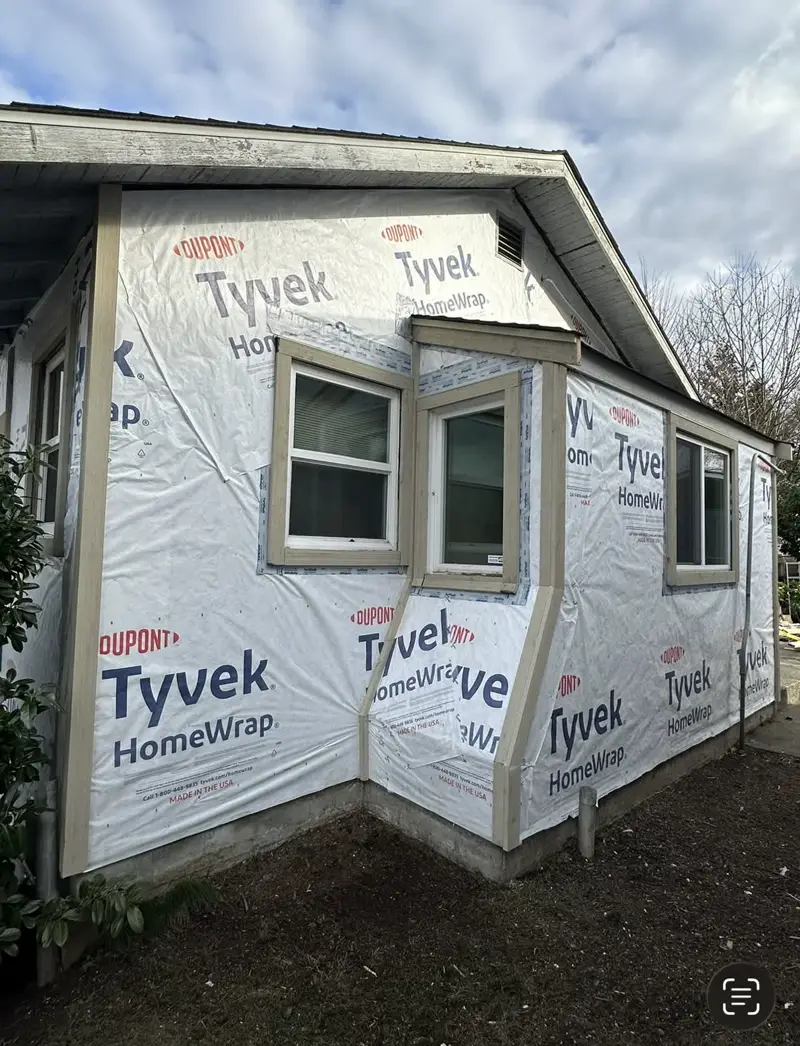
Siding is not waterproof, and it was never meant to be. It is the first layer of a system that sheds most of the rain, while the house wrap and flashing behind it handle the water that gets past. When one of those hidden layers fails, a small siding leak can quietly rot the wall for years.
Here is how that happens, where it usually starts, and what a real fix looks like.
How a wall is supposed to shed water
Think of a wall as layers: siding on the outside, a weather-resistant barrier (house wrap or felt) behind it, then sheathing and framing. Water that gets behind the siding should run down the face of the wrap and drain out at the bottom.
Flashing at windows, doors and roof edges directs that water outward. When any layer is missing, torn or lapped the wrong way, water ends up on the sheathing instead of draining away.
The most common leak points
- Windows without head flashing or with flashing tape lapped backward
- Roof-to-wall joints missing kick-out flashing
- Butt joints and corners that were never sealed or flashed
- The bottom course sitting on soil, bark, a roof or a deck
- Penetrations: vents, hose bibs, lights and wires
- Old felt paper that has torn or dried out
From leak to rot
Sheathing behind siding stays shaded and cool, so once it gets wet it dries slowly. Each storm adds more moisture, and after a few winters the sheathing softens, fasteners lose their grip and decay spreads into studs and plates.
Because all of this happens behind the siding, the first visible sign is often swelling, a stain below a window, or a soft spot when you press on a board.
Signs your siding is leaking
- Boards that swell, cup or pull loose
- Paint failing on one wall much faster than the others
- Stains on interior walls below windows
- Soft spots when you press on the siding
- Mold or mildew streaks running down the wall
What a proper repair includes
A lasting siding repair goes deeper than new boards:
- Open the area and check the wrap and sheathing behind it
- Replace any soft sheathing and rotted framing
- Install new house wrap lapped shingle-style into the existing barrier
- Add or correct flashing at windows, doors and roof lines
- Install new siding matched to the house, with sealed ends and joints
- Prime and paint, or leave it paint-ready
Can you patch just one area?
Often, yes. If the damage is local and the barrier around it is in good shape, a section repair blends in well and costs far less than re-siding. If several walls show leaks, or the house has no barrier behind the siding, replacing whole elevations usually makes more sense.
Frequently asked questions
How do I know if there is house wrap behind my siding?
Will new siding stop a leak?
Is fiber cement better at preventing rot?